Home Staging Cost in Charleston: What to Budget in 2027

Charleston listings are taking longer to sell. Homes across the Charleston Trident MLS averaged 52 days on market before an accepted offer over the past 12 months, up from 48 a year earlier. With buyers taking more time to compare, presentation carries more weight, and home staging cost in Charleston becomes a pricing decision, not a decorating one. Buyers meet your listing in the photos first, then decide whether it earns a showing, whether that’s an in-person visit in Mount Pleasant or a virtual tour from out of state.
This guide covers what staging costs heading into 2027, what drives the price, how long to budget for, who pays, who does the work, and when virtual staging is the smarter spend.
What Home Staging Costs in Charleston
Staging falls into three tiers, and the tier you choose matters more than the size of the home.
| Service | Typical cost | What you get |
|---|---|---|
| Staging consultation | $150 to $600 | A walkthrough and a written room-by-room plan. The seller does the work. |
| Occupied home staging | $500 to $2,500 | The stager edits and rearranges existing furniture and adds accents. |
| Vacant home staging | $1,500 to $4,000+ per month | Rented furniture, art, rugs and accessories for key rooms, usually on a 1 to 3 month minimum. |
The National Association of Realtors’ 2025 Profile of Home Staging puts the median cost of hiring a staging service at $1,500. When the listing agent handled staging personally, the median dropped to $500.
Charleston quotes run across a wide band. Local agents report full-service packages for Downtown Charleston homes landing between $3,000 and $8,000. A South of Broad single house with tall ceilings and formal rooms needs more and larger pieces than a three-bedroom in Summerville or Goose Creek. Collect two or three quotes and compare what each one includes, not just the total.
The factors that move your quote:
- Square footage and number of rooms staged
- Vacant or occupied
- Furniture tier (waterfront Mount Pleasant and Daniel Island listings usually call for higher-end pieces)
- Contract length and renewal terms
- Delivery access: stairs, tight downtown streets, island drive times
Vacant vs. Occupied Home Staging Cost
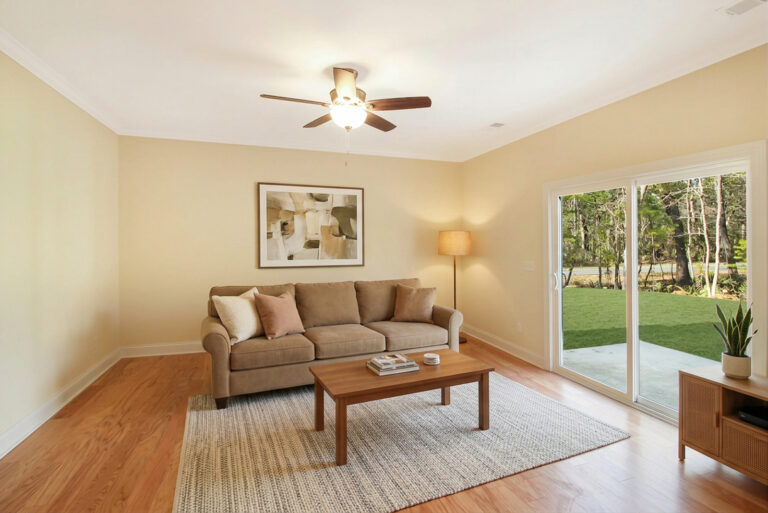
Occupied staging works with what the seller already owns. The stager edits furniture, rearranges rooms for flow, removes personal items, and adds rugs, pillows, art and lamps where rooms fall flat. It’s usually one visit and one invoice, which is why it sits at the low end of the range.
Vacant staging costs more because everything arrives on a truck. The quote covers design, furniture and accessory rental, delivery, installation and pickup. The first month carries all of that setup. Every month after is a rental renewal, so read the contract for the minimum term and the monthly renewal fee before you sign.
Vacant homes also have a camera problem. An empty room gives buyers no sense of scale, so they can’t tell whether a king bed fits the primary bedroom or a dining table seats six. In listing photos, a bare room reads smaller and colder than it feels in person, and that’s the version most buyers see first.
How Long to Budget For: Charleston Days on Market
Most vacant staging contracts run 30 to 90 days. The right term depends on how long homes in your price range take to go under contract. Here are the Charleston Trident MLS averages for days on market until an accepted offer (ShowingTime Plus report, August 2026, rolling 12 months):
| Price range | Average days on market |
|---|---|
| $150k and below | 67 |
| $150k to $250k | 62 |
| $250k to $350k | 53 |
| $350k to $500k | 52 |
| $500k to $750k | 47 |
| $750k to $1M | 49 |
| $1M and above | 52 |
Plan for at least two months of rental in most price ranges. Many sellers keep the furniture in place through inspection and appraisal, so a home that goes under contract on day 50 can still run into a third month. Below $250,000, where homes average 62 to 67 days, rental months add up fastest against a smaller sale price. That’s the segment where virtual staging earns a hard look (more on that below).
Is Home Staging Worth It?
NAR’s 2025 data gives you a clear case to bring to sellers:
- 29% of agents reported that staging raised the dollar value offered by 1% to 10%
- 49% of sellers’ agents saw staging cut time on market
- 83% of buyers’ agents said staging makes it easier for buyers to picture the home as their own
Run the math on a $500,000 listing in West Ashley. A 1% bump in the offer is $5,000, enough to cover a typical first month of vacant staging with room to spare. Every week shaved off market also saves the seller mortgage payments, utilities and HOA dues.
You don’t need to stage every room. Buyers rank the living room (37%), primary bedroom (34%) and kitchen (23%) as the most important spaces to stage, while the guest bedroom came in at 7%. Those top rooms also lead the photo gallery and set the tone of a walkthrough. Put the budget there first.
Staging is a weaker spend on as-is and investor sales, where buyers price the home on the numbers and the repairs, not the finishes.
Who Pays for Home Staging?
In most Charleston transactions, the seller pays, but practice varies more than sellers expect. In NAR’s 2025 report, 26% of sellers’ agents said it depends on the situation, 23% personally offer to stage the home, and 17% said the seller pays before listing.
Common arrangements:
- The seller pays the stager directly before the listing goes live
- The agent covers the consultation as part of the listing presentation, and the seller pays for the install
- The agent and seller split the cost
- A pay-at-close program pays the stager upfront and collects from the seller at closing
Whichever route you choose, put it in writing, including who covers renewal months if the listing runs past the first contract term.
Who Should Help With Home Staging
Staging works best as a handoff between four people, each owning one piece.
The listing agent sets the scope. You decide which rooms get staged, set the budget with the seller, and line up the schedule so the stager, cleaners and photographer don’t collide.
A professional stager handles vacant installs and the furniture inventory. Ask to see listing photos of past jobs, not just in-person shots, since photos are where most buyers meet the work. Confirm insurance, the minimum term and the renewal fee before booking.
The seller owns the free part: decluttering, deep cleaning, small repairs and curb appeal. These were the improvements agents recommended most in NAR’s report (91% declutter, 88% clean, 77% curb appeal), and they cost little beyond time.
The real estate photographer shoots after the install is complete, not the same morning. A good photographer spots what reads poorly on camera before it reaches the MLS: a rug too small for the seating group, a lamp left off, art that looks like a postcard on a long wall. With next-day delivery, the staged listing photos are MLS-ready within 24 hours of the shoot, so the rental clock and the marketing start together.
When Virtual Staging Makes More Sense
Physical staging isn’t the right call for every listing. Virtual staging adds furniture to listing photos digitally, and it fits three situations well.
Stage the key rooms, virtually stage the rest. Physically stage the living room, kitchen and primary bedroom, where buyers spend the most time on a tour. Then virtually stage the one leftover room, a bonus room or guest bedroom, in the same palette and style so the photo gallery reads as one consistent home.
Lower price point vacant homes. On a $200,000 vacant listing averaging 62 days on market, two or three months of furniture rental takes a real bite out of the seller’s net. A Virtual Staging Photo runs $35 per photo, so five staged rooms cost $175.
Tight timing or an absent seller. The seller has already moved out of state, the go-live date is days away, or no stager can fit the install in before the shoot.
One caveat: virtual staging improves the online listing, not the in-person tour. Buyers who visit will walk into empty rooms, so set expectations with the seller and label virtually staged photos according to MLS rules. See how virtual staging works for Charleston listings.
Stage First, Then Shoot
Home staging cost in Charleston runs from a few hundred dollars for a consultation to several thousand for a vacant install, and the right budget depends on price range, days on market and which rooms carry the listing. Spend where buyers look first, protect the seller’s net on lower price points with virtual staging, and schedule photos after the install so the first showing happens online at its best.
Book Now to schedule your listing shoot, or Call Now at 843-790-2820.