Which photos should you have your real estate photographer virtually stage for you?
Charleston is moving back toward a market where a listing either stands out or waits. Buyers scroll fast, and an empty room gives them nothing to hold onto. Virtual staging fixes that, but staging every photo in a vacant home adds up quickly and can make a gallery feel less real, not more.
The better question is which photos to virtually stage. Your real estate photographer is the right person to answer it, because the decision starts with how each room was shot. Here is how to make the call on your next vacant listing in Mount Pleasant, West Ashley, Summerville or anywhere else in the Lowcountry.
Your Real Estate Photographer Decides Which Frames Get Staged
A living room is rarely one photo. You might have three to five frames of it: from the corner, from the entry, toward the windows, toward the kitchen. Each one shows the room differently, and usually only one or two are worth staging. Your real estate photographer knows which angle shows the most floor, the best light and the clearest sense of scale, because they were standing there composing it.
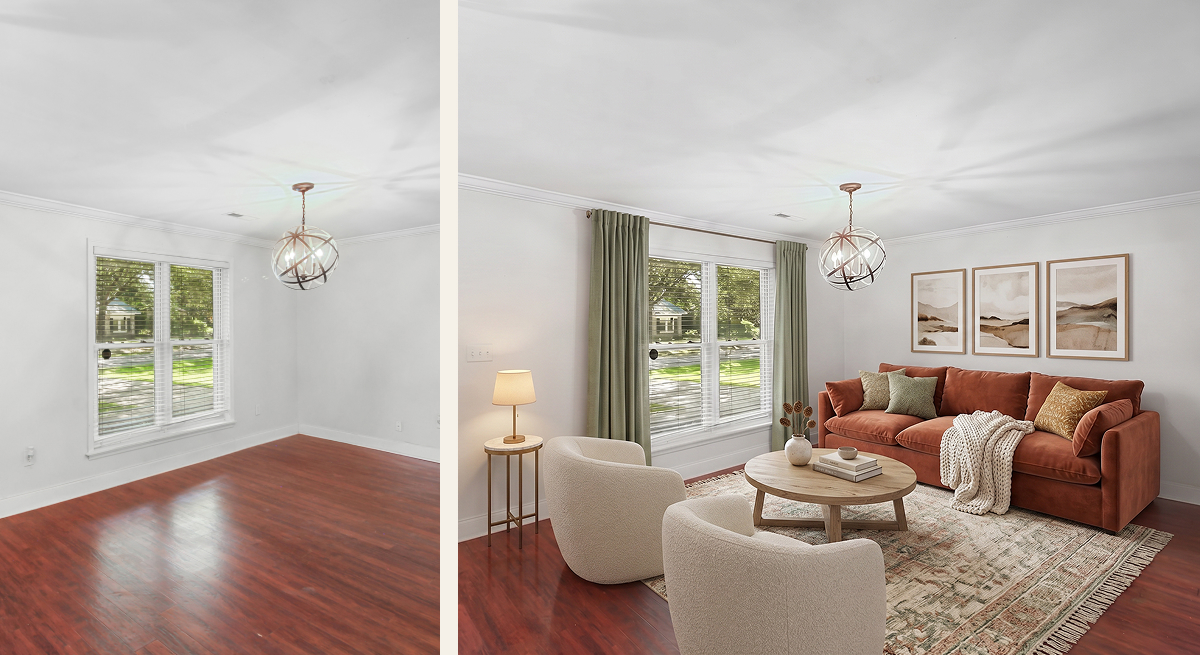
Virtual staging is not a filter you apply to a finished gallery. It is design work on a specific frame: furniture sized to the room, placed to match the perspective, lit to match the windows and grounded with believable shadows. Choosing the frame is the first and most important decision, and it takes the same eye that took the photo.
That care is why virtual staging is priced per photo. You pay for the handful of frames that carry the listing, not a blanket package.
Which Photos to Virtually Stage First
Start with the spaces buyers weigh most. In NAR’s 2025 Profile of Home Staging, buyers’ agents ranked the living room first (37%), the primary bedroom second (34%) and the kitchen third (23%). In photo terms, that means:
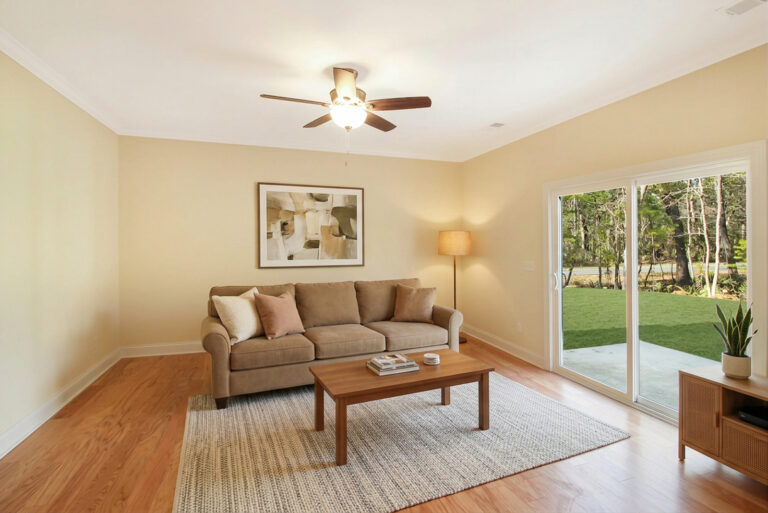
- The living room hero angle. The single frame with the most depth and window light. This is the photo that tells buyers how the home lives.
- The primary bedroom. One frame that shows where the bed goes and how much walking room remains.
- The dining zone in an open plan. A large empty space between the kitchen and living area reads as nothing. A table gives it a job.
Spaces That Need a Little Imagination
Some spaces look like nothing until someone shows what they could be. These are often the best use of a staged photo, because the staging adds information instead of decoration.
- A FROG. The finished room over the garage is common across Charleston listings. Empty, it reads as a leftover. Staged as an office, media room or guest suite, it reads as extra living space.
- A bonus or flex room. A desk, a sofa or a bed tells buyers what the room can become.
- A screened porch, back patio or backyard seating area. Outdoor living is a Lowcountry selling point. A dining set or a pair of chairs and a fire pit helps buyers picture evenings outside.
Whether these earn a staged photo depends on how they were shot and what the space is for. A wide frame that shows the whole room or porch is worth staging. A cramped angle is not, and your photographer will tell you so.
Choose the Style Before You Stage
Furniture style changes who the listing speaks to, so it is a marketing decision, not a decorating one. Match it to the architecture and the buyer you want:
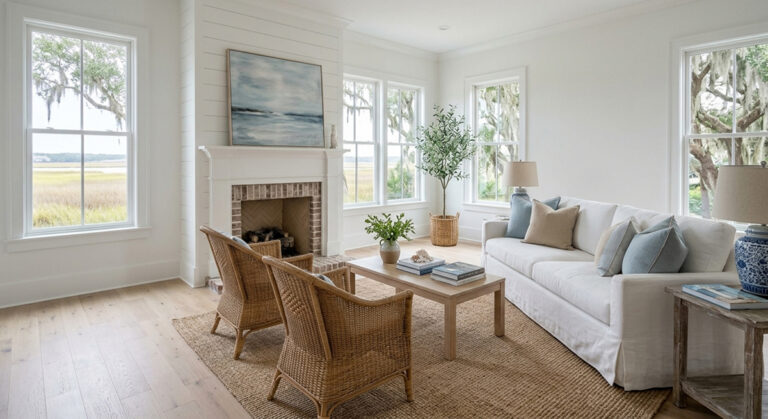
- Coastal cottages on Folly Beach, Isle of Palms and James Island call for light, relaxed pieces. Industrial furniture in a room with shutters and beadboard feels wrong the moment a buyer sees it.
- Historic homes south of Broad suit traditional, layered pieces that respect the architecture.
- New builds in Summerville, Daniel Island and Johns Island often fit transitional or modern farmhouse.
- Investor and rental buyers respond to layouts that show flexibility and sleeping capacity.
Tell your photographer who you want to attract before the shoot. Keep one style across every staged photo so the gallery reads as one home.
Which Photos to Skip, and One Exception
Skip spaces that explain themselves empty: hallways, laundry rooms, closets, standard bathrooms and secondary bedrooms with an obvious purpose. Buyers understand them at a glance, so staging spends budget without adding information. In NAR’s data, only 7% of buyers’ agents called guest bedroom staging very important.
The exception is a bathroom that has been remodeled well. A new freestanding tub, a custom tile wall or a standout vanity is a selling feature, and staging can add the towels, plant and stool that make it feel like a spa. The finishes themselves stay exactly as built. A kitchen follows the same rule: stage it when it opens to the living area or has an island with room for stools, and leave it alone when it already reads clearly.
How Many Photos to Stage by Home Size
A good working range is about 20 to 30 percent of the gallery, and most listings need far fewer than that.
| Home type | Staged photos |
|---|---|
| Condo or studio | 2 to 3 |
| Standard family home | 3 to 5 |
| Large family home | 4 to 6 |
| Luxury home | 5 to 8 |
| Fully vacant luxury estate | 8 to 10 |
Cost is where this plan pays off. Across published rates from staging companies and real estate photographers around the country, designer-made virtual staging typically runs $25 to $50 per photo, and $30 to $40 is the most common range when a photographer delivers it. AI-only tools charge a few dollars per image, but they do not include a photographer choosing the frame, the style or the layout.
| Staged photos | Typical cost at $30 to $40 per photo |
|---|---|
| 3 | $90 to $120 |
| 5 | $150 to $200 |
| 8 | $240 to $320 |
Staging all 25 frames of a typical shoot at those rates would run $750 to $1,000. Whole-home physical staging of a vacant house commonly runs $1,500 to $4,000.
Where Staged Photos Belong in Your Gallery
Put your strongest staged photo in the first set of images, not at the end. Those first frames are what buyers see in search results and on the listing page, and a staged living room tells them how the home lives before they scroll. Lead with the hero frame, then let the unstaged kitchen, baths and exterior support it. Pair it with a Virtual Twilight Photo for the exterior and the listing opens with warmth inside and out.
Two rules keep it honest. Disclose the staging in your listing remarks and label the photos, following your MLS’s rules. And limit staging to furniture and décor. Walls, finishes and fixtures stay as they are. Keep an unstaged version of each staged room in the gallery or ready on request, so buyers know what they will see at the showing.
For a full look at how the service works, read the guide to virtual staging in Charleston. To compare it with renting furniture, see home staging costs in Charleston.
Stage the Right Photos, Not All of Them
A vacant listing does not need a fully furnished gallery. It needs a few well-chosen frames, in the right style, near the front. See every service on the real estate photography services page.